← Back to case studies
Barcelona's residential community
Running a €100,000+ budget with no system behind it: how ComunitApp brought structure to Barcelona's residential community management
INDUSTRY
Real Estate
EMPLOYEES
2000+ residents

When Griselda became president of her Barcelona residential community, she spotted what others had quietly accepted. As an accountant by profession, she understood immediately that the community was running a budget of over €100,000 per year without a single reliable system behind it.
Supplier contacts lived in one board member's phone. Maintenance history was buried in paper files nobody could locate quickly. Community decisions were documented in handwritten minutes - occasionally updated, frequently misplaced. Financial records existed, but matching them to the right category, tracking what had been paid, and what was still outstanding took hours that board members donated out of personal goodwill.
And when a president's term ended, the institutional knowledge they had built up walked out with them. A new president inherited an address book and a filing cabinet, not a running system.
Most residential communities don't fail because they made the wrong technology choice. They fail because no one ever sat down and mapped how information should actually move: who decides what, how residents get informed, where the financial record lives, what a new president finds on day one.
Griselda's community had worked around these gaps for years. WhatsApp groups handled announcements — until they became impossible to search. Paper votes handled decisions — until turnout became unreliable. Individual memory handled supplier relationships — until the wrong person was unavailable at the wrong moment.
The workarounds had compounded into a set of parallel processes: the official one, and the real one that involved calling the right person. Buying software at this point would have digitized the chaos, not replaced it.
"For years, we struggled with chaotic processes in our property management."
kwapso's first step was not a prototype. It was a process analysis: mapping the real flow of how the community made decisions, managed money, communicated with residents, and handled maintenance requests. Not the theory — the reality of a Tuesday afternoon when something broke.
From that map, the ESA process ran: eliminate what had no reason to exist, streamline what remained, then automate what was repeatable. Several steps in the existing process existed only because no one had questioned them. Removing them first meant the app that followed was smaller, faster to build, and easier to adopt.
The result was a clear backlog and a two-week build roadmap. Only then did design begin.
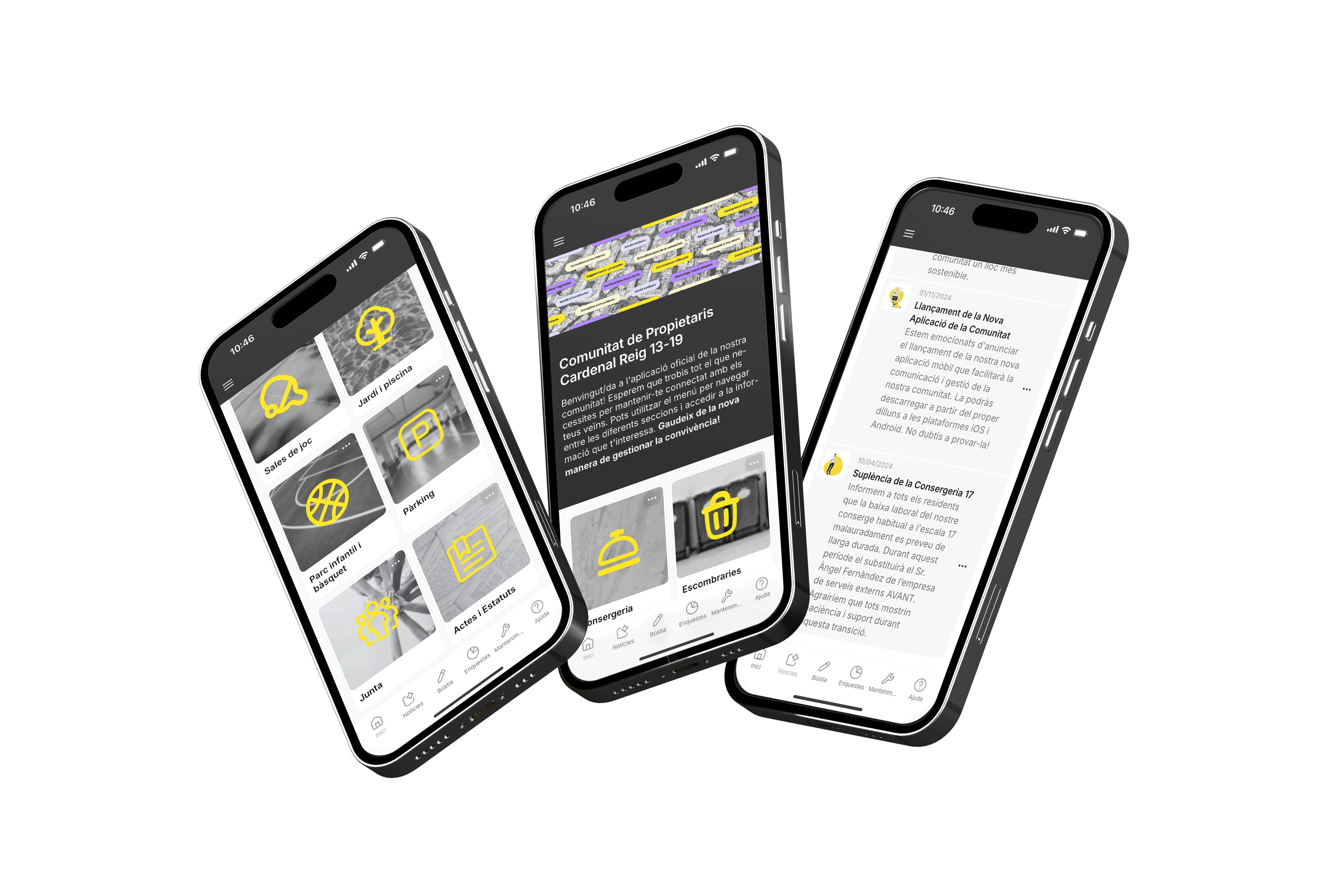
Week one covered the foundation: user setup, role structure, and data migration from the scattered existing systems. Board members received training before any resident was invited onto the platform.
Week two brought the full community online: onboarding, adjustments based on real usage from week one, and a community-wide rollout. The sequence mattered. Residents arriving into a platform that already contained real community data felt different from one that was empty and unfamiliar.
By day fourteen, ComunitApp was live, not as a pilot but as the operating system.
"The interface is so intuitive that even our less tech-savvy residents used it straight away."
The voting module replaced paper ballots, printed notices, and manual vote counting. Residents now vote anonymously on their phones; board members see overall participation totals without seeing individual responses. A decision that once required organizing a physical meeting can happen the same day.
Financial management moved from scattered spreadsheet fragments to one view. Every expense is categorized automatically. Every supplier contract, payment history, and upcoming obligation is accessible without digging.
The communication layer retired the WhatsApp groups for official announcements. One feed, owned by the board, visible to all residents. No more parallel threads, no more "did you see the message from three weeks ago?"
Access is layered to match how the community actually operates: residents see announcements and can submit maintenance requests; board members manage finances and decisions; maintenance staff can post updates without touching sensitive data. One verification step at setup. No ongoing permission management.
The most underrated outcome is continuity. A new president no longer starts from zero. The supplier history is there. The financial record is there. The decisions made two years ago are documented and findable. The community's institutional knowledge now lives in a system, not in a person.
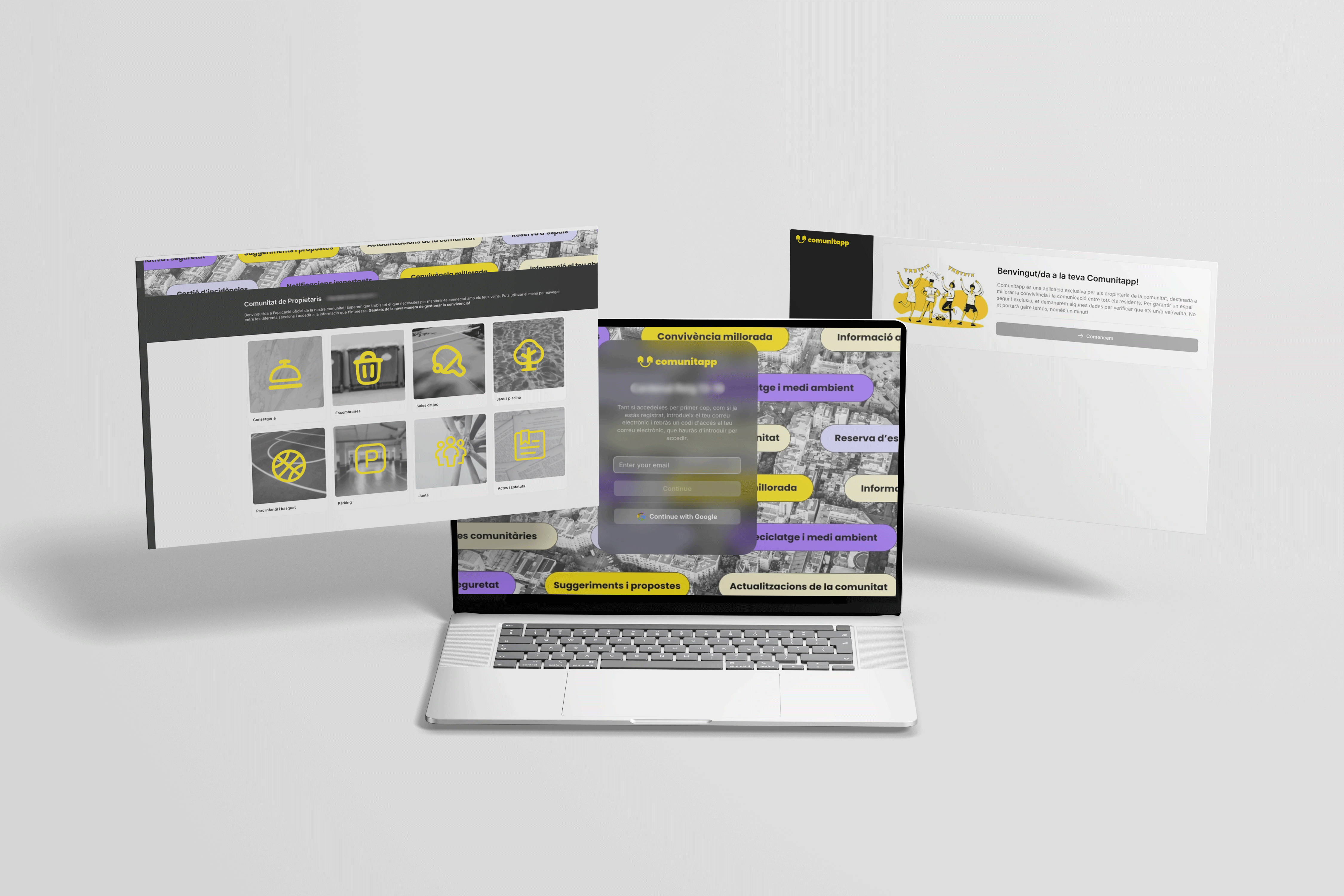
ComunitApp consolidated more than ten previously manual or fragmented processes into one platform. The community's annual budget over €100,000 is now tracked, categorized, and visible to the board in real time. Board members spend less time on administration and more time on the decisions that actually improve community life.
"Aurora understood our challenges better than we did ourselves and delivered ComunitApp in two weeks. The tailored solution digitized our processes and created clear, traceable structures."
— Griselda, Community President
- ComunitApp Voting Module — replaced paper ballot collection, printed meeting notices, and manual vote counting for community decisions.
- Finance Dashboard — replaced disconnected spreadsheets and manual expense categorization, giving board members real-time budget visibility across the full annual operation.
- Announcements & Messaging Hub — replaced WhatsApp groups and paper notices as the primary communication channel between board and residents.
- Role-Based Access Control — replaced ad-hoc permission arrangements, ensuring residents, board members, and maintenance staff each access exactly what their role requires.
Managing shared property with real operational discipline is exactly the kind of challenge kwapso is built for. If your organization runs on scattered information and borrowed time, take the operational health check → — it shows you where the gaps are before you decide what to build.
Ready to build the structure behind your operation? Book a strategy call →