← Back to case studies
Koidl Vergnügungsbetriebe GmbH
200 Applications, Nine Positions, Zero Chaos: Recruiting at Vienna's Prater
INDUSTRY
Hospitality
EMPLOYEES
60+
Koidl Vergnügungsbetriebe is not an anonymous theme park operator. It's a family business with deep roots in Vienna's Wurstelprater, the city's historic amusement district, centered around Calafati Square. Stefan Sittler-Koidl and Karin Koidl run the operation together. Their portfolio spans roughly a dozen attractions: from the Viennese Loop and the Vienna Free Fall Tower to a ghost train and an organic bar in the middle of the Prater.
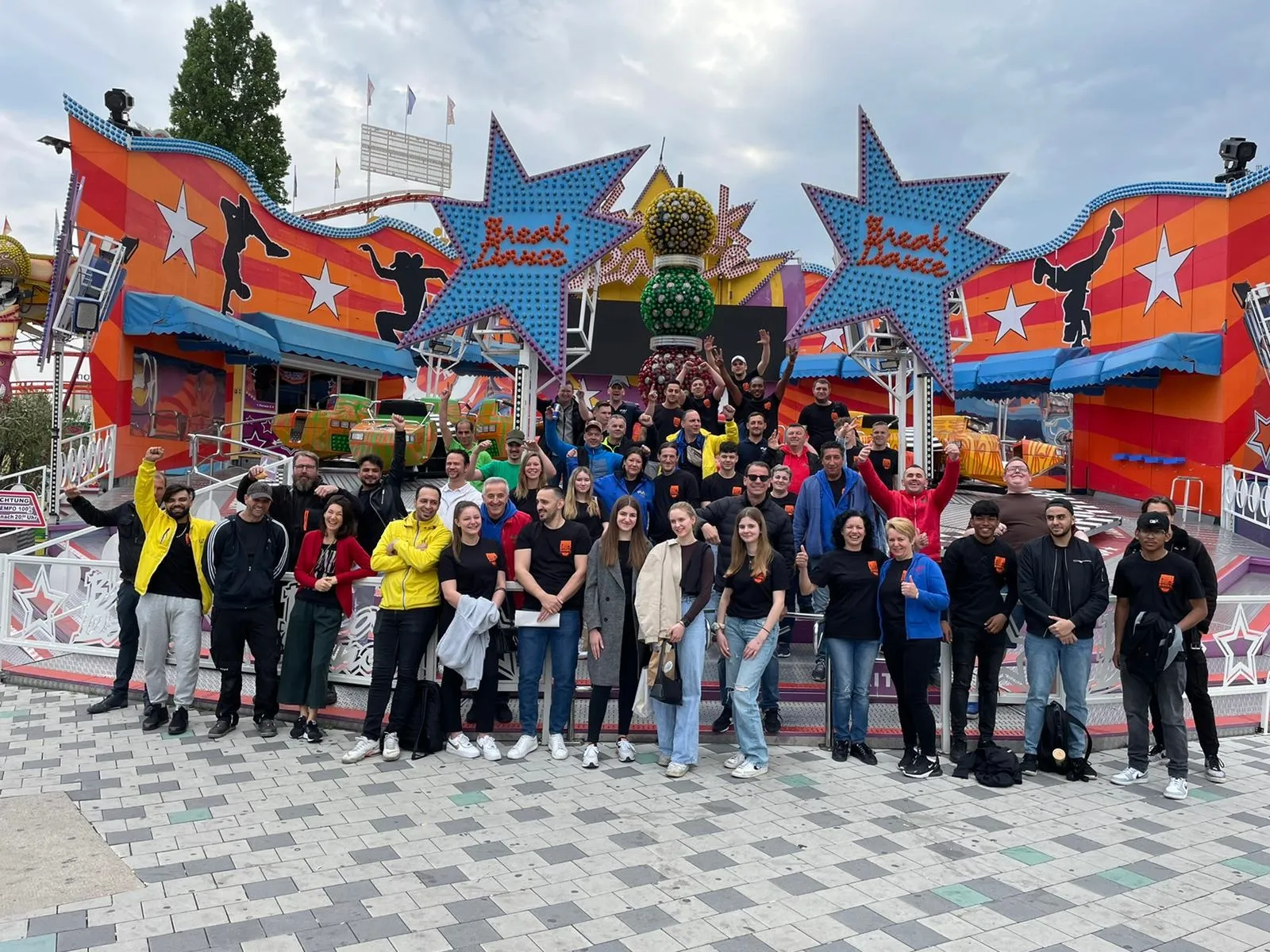
This family-run institution faced a very present-day problem: find staff. Nine positions, at the same time.
Before the campaign, Koidl Vergnügungsbetriebe had no structured digital recruiting presence. There was no digital way for job seekers to find out about open roles or about the employer behind them. Launching a campaign is one thing. Managing what comes back is another — especially when nine roles are running in parallel and nobody on the team has the capacity to manually track who applied for which position, and when. A campaign that works creates volume. Volume without structure quickly becomes a second problem.
The response was overwhelming.
Vienna-based agencies Annex and Drehzeit handled the broader effort: web development, social media advertising, video production. kwapso came in as a third partner with a clearly defined scope — the job portal itself, and the system behind it that captures incoming applications. This is a pattern that comes up more often than people expect. On larger projects, kwapso works alongside other agencies and steps in not to build the next app, but to create the process structure behind it.
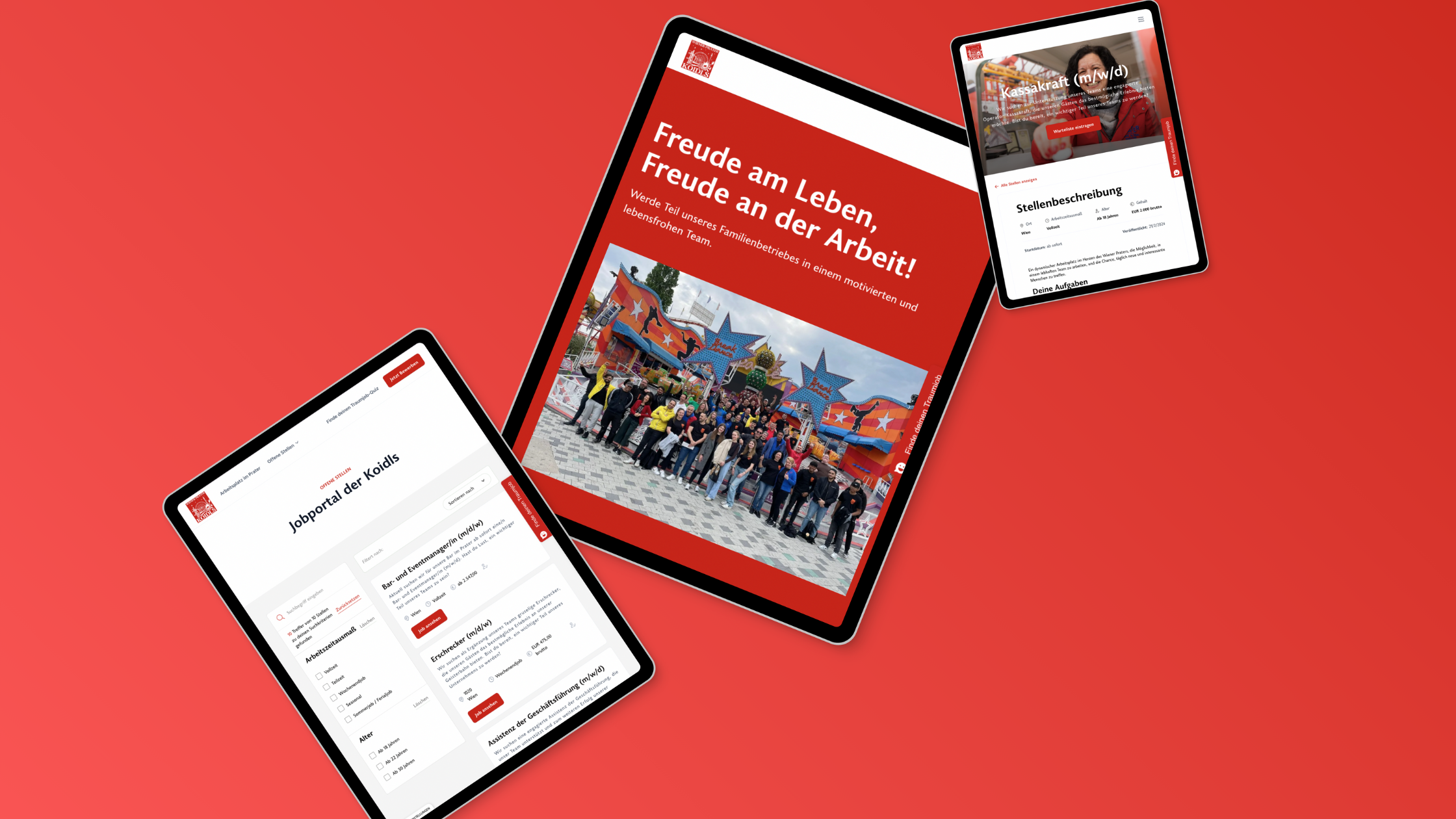
The first step was giving Koidl access to the kwapso portal so the team could see what was being built in real time. Then came the actual analysis: how many positions are running simultaneously, how many applications are realistic at this campaign scale, and what can a small HR team actually manage by hand? The answer was clear. Nine open roles backed by dozens of videos meant any approach without a central structure would collapse within weeks.
A careers page that can't scale breaks again at the second campaign. For Koidl, the portal needed a CMS structure the team could manage themselves: add a new position, remove an old one, without calling a developer every time. That was the baseline condition for a nine-role simultaneous campaign to work at all. Flexible and reusable. Not built for one occasion.
From that foundation came the actual system: an applicant dashboard built on Koidl's real data. Every application gets a status, plus notes and supporting documents, all in one place instead of scattered across inboxes. This was the direct answer to the volume the campaign generated. Content and ad spend deliver the applications. The dashboard makes sure they don't get lost.
Once the dashboard was live and in daily use, the next bottleneck surfaced. Every new application needed a response, and typing them manually costs time the team doesn't have at this volume. The following sprint added automations: an acknowledgment email sent immediately on receipt, and the ability to send a rejection directly from within the dashboard. This is exactly the kwapso sprint pattern: stabilize first, then solve the next bottleneck.
The applicant dashboard was scoped for the campaign window, a specific, time-limited recruiting effort, not an ongoing tool. The job portal itself, however, Koidl Vergnügungsbetriebe continues to run independently. Applications arrive through the careers page on an ongoing basis, without any active ad spend. QR codes at the attractions now point directly to the careers page, turning daily Prater visitors into part of the recruiting pipeline with no ongoing campaign and no further involvement from kwapso.
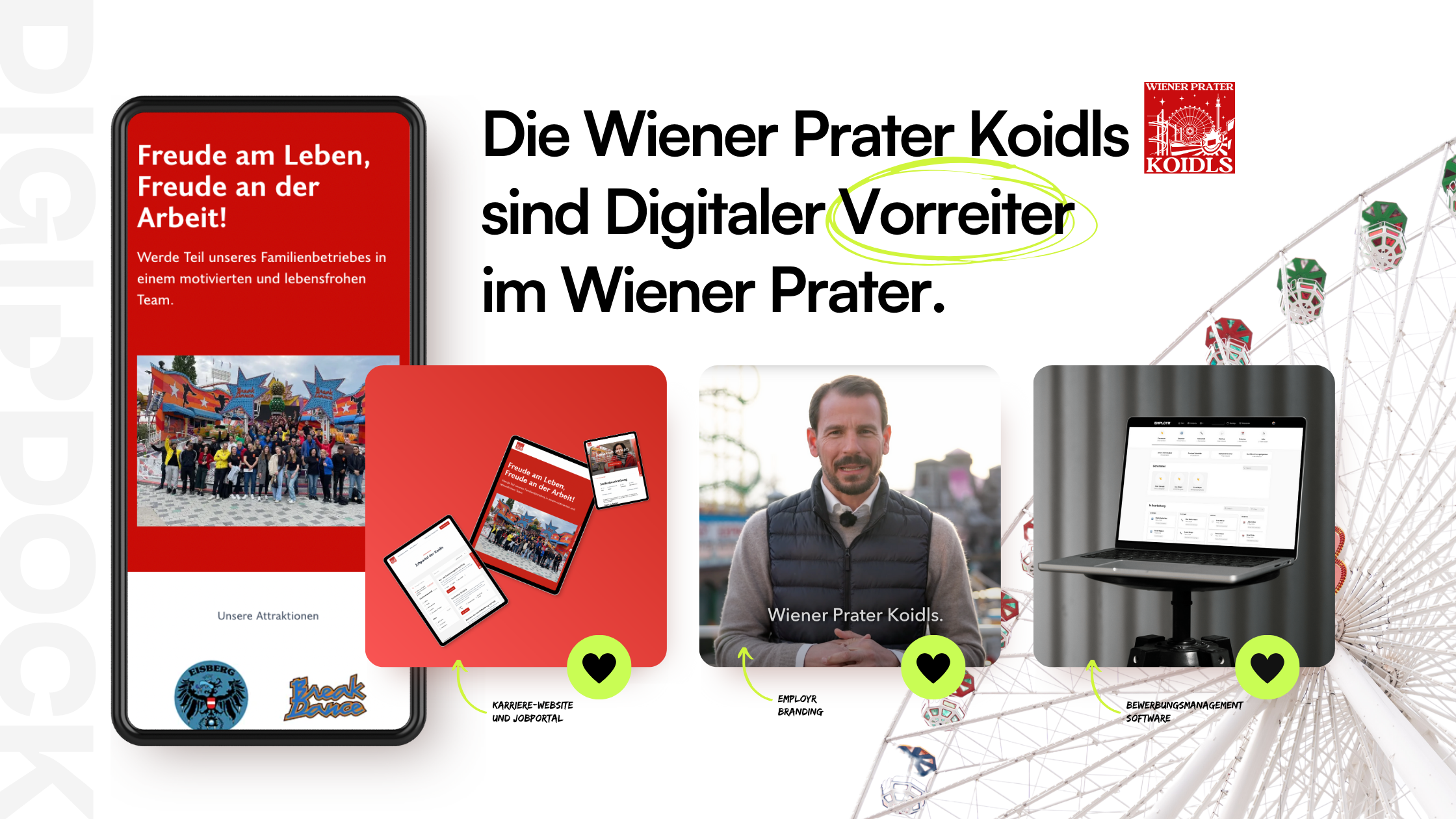
Within three months, more than 200 qualified applications arrived for the nine open positions, managed in a system that hadn't existed before. Dragana Ladan, HR Manager at Koidl Vergnügungsbetriebe GmbH, puts it this way:
"Alex and the team built us an applicant dashboard that makes management significantly easier and saves real time. Creative, solutions-oriented collaborators who helped us generate applications quickly and efficiently. Working with them was productive and enjoyable, and the result is a great product tailored exactly to what we needed."
— Dragana Ladan, HR Manager, Koidl Vergnügungsbetriebe GmbH
The Koidl project shows a targeted but typical kwapso solution: a dashboard that centralizes applications. This is not a one-off. Several applicant dashboards have been built over the years, each shaped around the specific recruiting process in question. With social ad campaigns running across multiple channels simultaneously, it quickly becomes visible how much can be structured before automation even enters the conversation. Where it makes sense, kwapso builds integrations with existing systems — an HR platform, an ATS, an internal tool — rather than placing an isolated solution next to something else. And where off-the-shelf recruiting tools hit the limits of how a company actually operates, a custom app fills the gap.
Across recent projects, kwapso now builds AI agents that automatically score applications against defined criteria and create candidate summaries before any human reviews them. That was not part of the Koidl solution. But it shows the direction applicant management is heading, and where the potential still lies for businesses dealing with high application volumes.
Dealing with something similar right now? A lot of applicants, no system to manage them? Let's talk it through in a strategy conversation.