← Back to case studies
APB Padel Base GmbH
Interview: "At some point, you just lose the overview"
INDUSTRY
Sport & Event
EMPLOYEES
11 plus 40 independent coaches
PLATFORM
TIMELINE
Ongoing Partnership
Padelbase was founded in 2021. The first courts opened in 2022. Today the company runs 19 locations with nearly 50 courts across Austria, works with 40 freelance trainers, and has built an in-house team of 11. Padelbase invests in its own courts and operates a franchise model to stay at the front of the Austrian padel market.
What that growth means on the inside isn't visible on the website. You see it in the folders on OneDrive, in the WhatsApp groups, in the notes someone scrawled somewhere. Björn Nareyka knows this well. We spoke with him.

Essentially with Outlook, OneDrive, and a lot of WhatsApp groups. Everyone keeps track of things somehow, sometimes on a piece of paper. For every location there's information that needs coordinating: access codes, contacts, sponsors. It all got saved in Word and Excel files, somewhere on OneDrive. And then there are more locations, more employees, more trainers.
At some point you just lose track - me and my team both.
Growth. We went from two founders to a team with employees and trainers, and at the same time we were opening new locations. With a small team, you know everyone, you talk every day. It works from memory. Once the company gets bigger, the knowledge can't live in two or three people's heads anymore.
%20(1).jpg)
It's also a risk question. If a key person is sick or leaves, the knowledge goes with them. What does a contract cover, when does it expire, who is the contact at location X? That needs to be stored somewhere, accessible, not dependent on the right person picking up the phone.
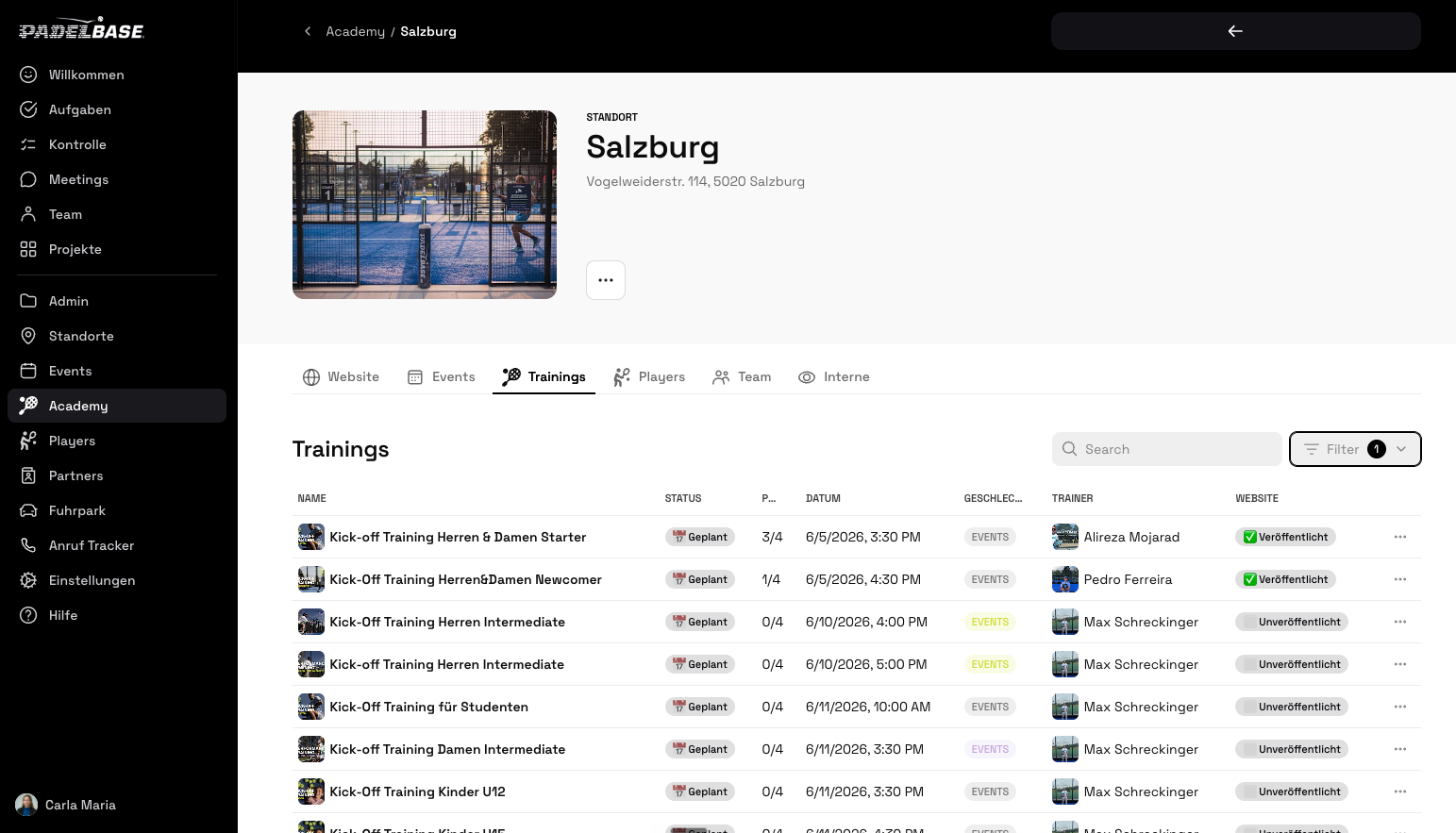
It gives us structure where there was chaos before. We manage events and bookings at our venues much more efficiently now: create them, publish them online, coordinate confirmations and cancellations. It was very manual before and took a lot of time. A lot of it runs automatically now.
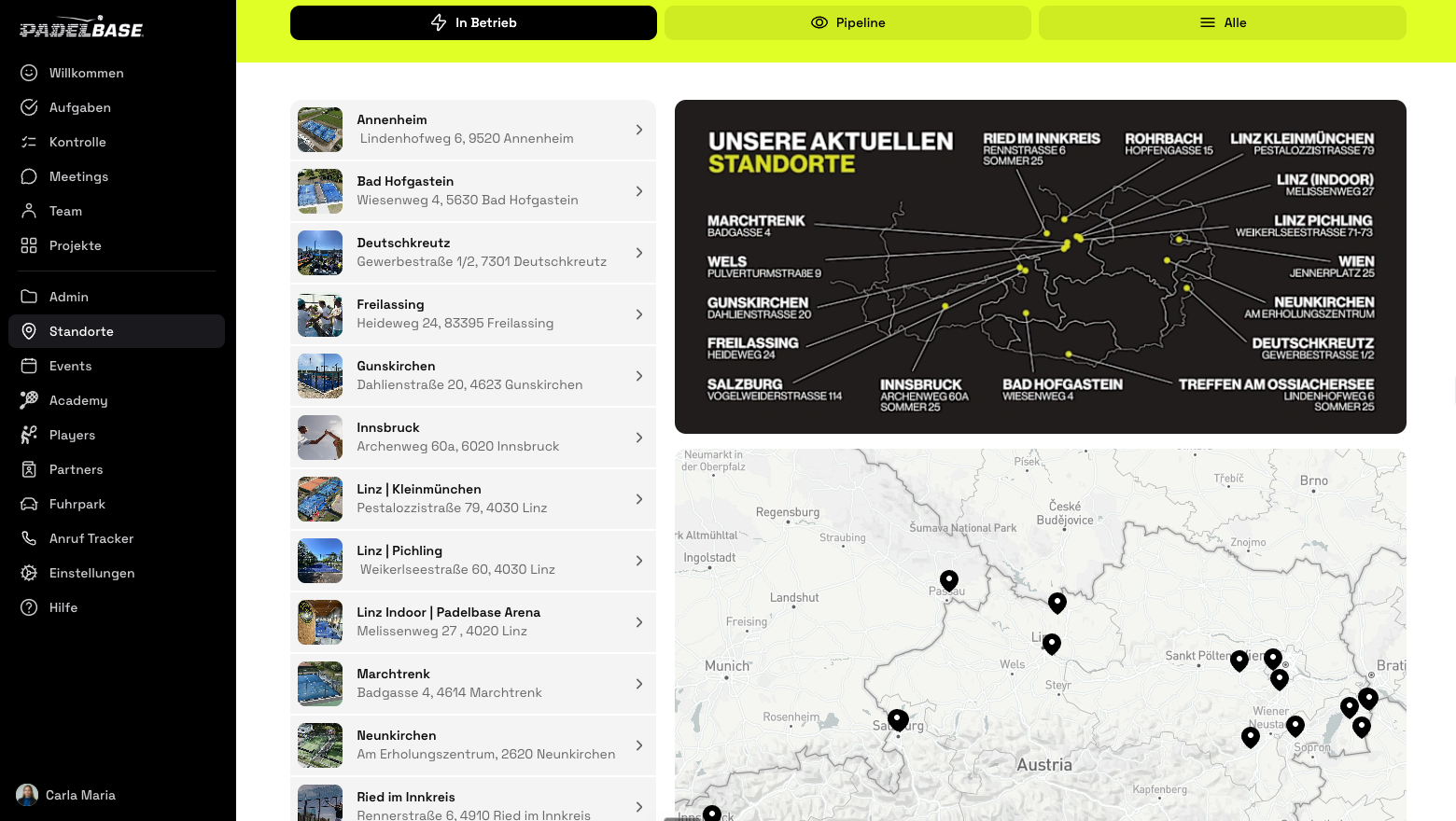
For the locations, we have a central overview: access codes, contacts, sponsor details, contract information. Visible to everyone, at a glance. And internally there's a task and controlling system for the team. I can see who has what, what's open, what's been completed.
Much more visibility, and more confidence in the team. Not that I distrusted them before — now I can simply see whether a task was completed. I can check back weeks later on how an event went. That gives you a sense of security as a CEO.
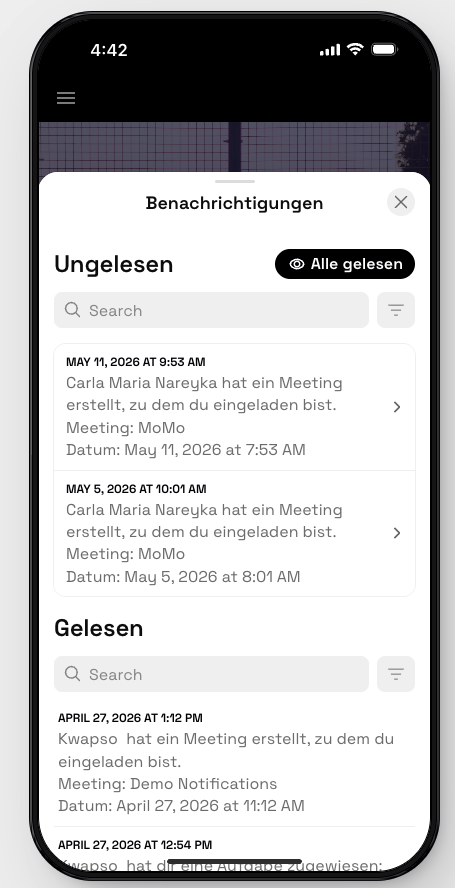
The Momo system has changed how I start the week. Monday is the anchor point: I look in, see what the team has on, what's open, what needs to happen this week. The mobile view is practical too. I can check while I'm out, from the car, over the weekend: which events are running at our locations right now, who's running which training session, what's open in the team? That sounds like a small thing. But when your business is running across 19 locations at the same time, having that visibility on demand is something you simply didn't have before.
To be fair, we're honestly still far from using the system to its full potential. But what we're already using helps us every single day.
The human element was the main reason. The person behind it has to be the right fit. I need to be able to understand them, and the first impression has to work. The best product in the world doesn't matter if you can't connect with the people behind it.
Alex thought ahead from the start. Not just delivering what we asked for, but actively considering what might make sense. Fast responses, clear communication, even in busier weeks. That's not a given.
There are other solutions out there. But it's not about having the technically best software. It's about having software that fits us. And kwapso fit from day one.

I know this from our own business, but also from my father and his company before. Day-to-day operations consume everything. You do the next thing, and then the next, and after five years you look up and ask: what actually happened here?
And the worst part isn't the disorder. It's that you no longer have time to ask the right questions. Are we still on the right path? How is the industry developing? What could we do differently? How can we reduce costs, how can we grow revenue? Those are the questions a CEO needs answers to. And that's exactly what there's no time for, because you're too far inside it.
That's why I think an outside perspective is always valuable. Someone who looks in and asks: why do you do it this way? Why does that work the way it does? The answers to those questions — you often don't have them yourself anymore, because you stopped asking them too long ago.
I don't explain too much. What kwapso builds is always tailored. That's hard to describe from the outside. I say: go directly into the conversation, book a no-commitment first call, and see for yourself. That's better than anything I could explain beforehand.
Want to see where the same patterns exist in your business? kwapso makes that visible in a structured first conversation. Book a conversation